People who are deaf or hard of hearing, where a hearing assistance dog alerts to sounds that would otherwise be missed.
Registered NDIS Provider · 405 358 3296
NDIS Assistance Animals and Other Innovative Supports in Queensland
For the supports that don’t fit a standard category.
What are assistance animals and innovative supports?
This covers two related things. Assistance animals, most commonly accredited assistance dogs trained to perform specific tasks related to a person’s disability. And innovative supports, which are approaches that don’t fit an existing support category but would meet a plan goal better than the standard options.
On assistance animals, the terminology matters and it’s the source of most of the confusion. A pet is a pet. A therapy or companion animal provides comfort but has no specific task training and no public access rights. An assistance animal is trained to perform identifiable tasks related to a disability, is accredited, and has legal public access rights under Queensland law.
Innovative supports work on the same logic. If there’s an approach that would meet your goal better than what’s already funded, it can be considered, but it has to be argued rather than simply requested.
Who this support helps
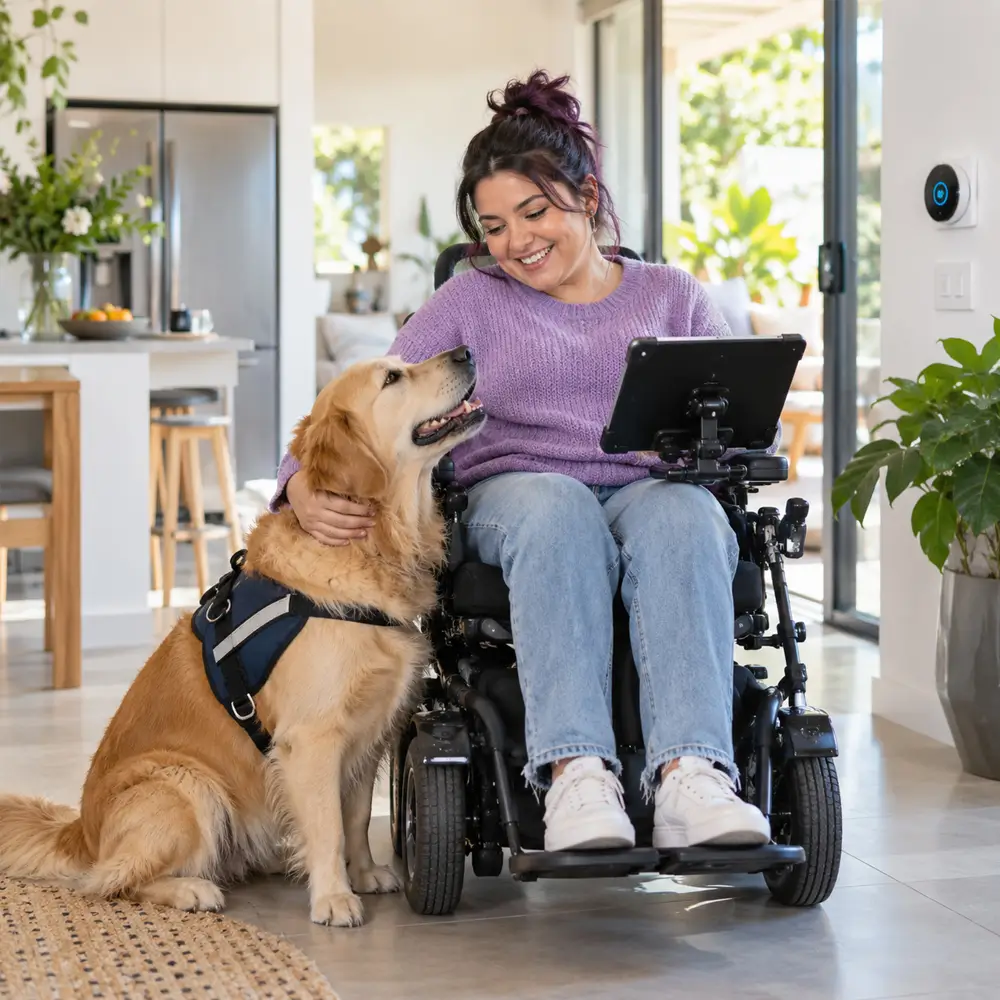
Participants with mobility limitations, where a dog can retrieve items, open doors, provide bracing support and summon help.
People with seizure disorders or medical conditions where an animal can be trained to respond to or alert before an event.
Participants with psychosocial disability or post-traumatic stress, where a task-trained psychiatric assistance dog can interrupt specific responses. This is the area where accreditation standards and evidence requirements are strictest, and where participants most often go in with expectations that don’t match the process.
And anyone whose goal genuinely isn’t served by the standard menu of supports, and who has been told no without anyone actually testing the case.
How the support works
-
It begins with getting clear on what the animal or the support would actually do. Not how it would make you feel, but the specific tasks it would perform and the disability-related need each one addresses. That reframing is the single biggest factor in whether a request succeeds.
-
Then the evidence gets assembled. Reports from your treating clinicians, a functional assessment, a comparison against alternatives already tried, and a realistic account of the ongoing responsibilities.
-
Accreditation is the next piece. In Queensland, public access rights depend on the animal being appropriately trained and accredited, and organisations that provide accredited assistance dogs have their own application processes, assessments and waiting lists, entirely separate from the NDIS.
-
The waits are long. Multi-year waiting lists are normal for accredited assistance dogs in Australia, and applying early is worth more than any amount of chasing later.
-
For innovative supports, the work is building the argument. What the goal is, why existing funded supports don’t reach it, what the alternative would cost and achieve, and what evidence supports it.
The problems participants run into
The information available online is poor. Participants find websites promising accredited assistance dogs on short timeframes, and some of those operations do not deliver an animal that meets Queensland accreditation standards.
The distinction between a companion animal and an assistance animal is misunderstood constantly, and people invest significant hope and money before finding out that an existing pet cannot simply be reclassified.
Applications get declined because they were framed emotionally rather than functionally. The need is real, the case is genuine, and the paperwork describes comfort rather than tasks.
Ongoing costs get underestimated. Veterinary care, food, equipment and insurance across a working life of eight to ten years add up, and a participant who can’t sustain that has a difficult problem and a dependent animal.
And the waiting is genuinely hard. Multi-year waits, with a disability affecting daily life throughout, wear people down. Some give up while still on the list.
How GOTLEHS CARE helps
We’re straight with you about timeframes and probability. If a request is unlikely to succeed as it stands, you’ll hear that from us early, along with what would need to change. Encouraging someone into a two year process with poor prospects is not a kindness.
We help you plan the ongoing responsibilities honestly. An assistance animal is a working partnership and a living creature that needs care on days when you have none to give, and thinking that through in advance is part of doing it properly.
And while you wait, we work on the goal by other means. If independence outside the home is the aim, there are supports that can progress that now rather than in three years.
Talk to us before you commit to anything
Frequently asked questions
If your question isn’t here, ring us on 0425 799 687. We’d rather answer it properly than have you guess.
Can my existing pet be recognised as an assistance animal?
Almost never. An assistance animal must be trained to perform identifiable tasks related to your disability and be appropriately accredited, which is a substantial training pathway rather than a certificate. Companion animals provide genuine benefit, but they don’t carry public access rights and aren’t funded on that basis.
How long is the wait for an accredited assistance dog?
Multi-year waits are normal in Australia, and demand consistently exceeds the number of dogs available. Applying early matters more than anything else you can do, and it’s worth applying while a funding request is still in progress rather than waiting for approval first.
What does the NDIS actually fund?
Where a request is approved, funding typically covers the accredited animal and ongoing costs such as veterinary care, food and equipment across its working life. The evidence bar is high, and the request needs to show the animal addresses a disability-related need and represents value for money against alternatives.
What counts as an innovative support?
An approach that doesn’t fit an existing support category but would meet a plan goal better than the funded options. It has to be argued rather than requested, with a clear account of the goal, why current supports don’t reach it, and what the alternative would achieve.
What if my request gets declined?
A decline isn’t always the end of it. Requests are frequently knocked back because the case was framed around comfort rather than function, or because a piece of clinical evidence was missing. It’s worth understanding the reason before deciding whether to strengthen the case or pursue a different route.