
Recent school leavers, whose days have been structured by someone else for thirteen years and who now have to build a week themselves.
Registered NDIS Provider · 405 358 3296
NDIS Development of Daily Living and Life Skills in Queensland
Support that aims to make itself less necessary.
What is development of daily living and life skills?
This support funds training in the practical skills of running your own life. Cooking, shopping, budgeting, laundry, cleaning, managing appointments, using public transport, dealing with mail and bills, keeping yourself safe at home.
The important word is development. This isn’t someone doing the task for you. It’s someone teaching you to do it, then stepping back in stages until you’re doing it alone. If your support hours aren’t trending downwards on a skill over time, something has gone wrong with how it’s being delivered.
Who this support helps
Participants who already live independently but are struggling with specific parts of it. Someone might manage cooking and cleaning perfectly and still be sinking under unopened mail.
People rebuilding after a period of poor health, hospitalisation or crisis, where the routines that used to hold a household together stopped and haven’t restarted.
Participants with acquired brain injury, where skills that were once automatic now need to be relearned with different strategies rather than the old ones.
And people whose parents have done everything for them, kindly and with the best intentions, for thirty years. That’s a common situation and it isn’t anybody’s fault, but it does need addressing before circumstances force it.
How the support works
-
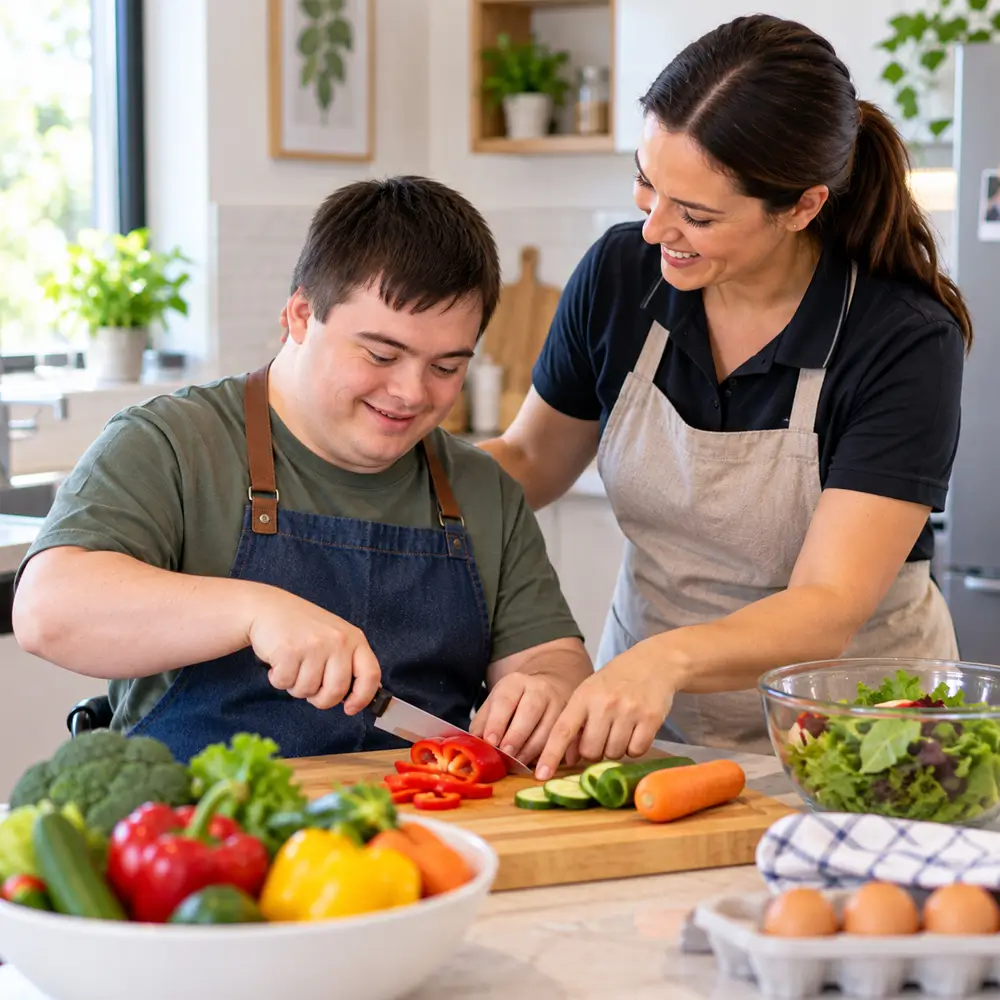
We teach in your home wherever we can, because skills learned in a centre kitchen have a habit of staying in the centre kitchen. Your stove, your fridge, your budget and your bus stop are the ones that matter.
-
Each skill gets broken into steps, and we work out which steps you already have. Most people can do more of a task than they get credit for. Someone who can’t cook a meal from scratch can often chop, measure and follow a timer, and starting there is faster than starting from zero.
-
Then the support fades on purpose. Doing it together, then doing it with prompts, then you doing it while we’re in the room, then a text message afterwards to see how it went. The last stage is the one providers skip most often, and it’s the one that decides whether the skill survives.
-
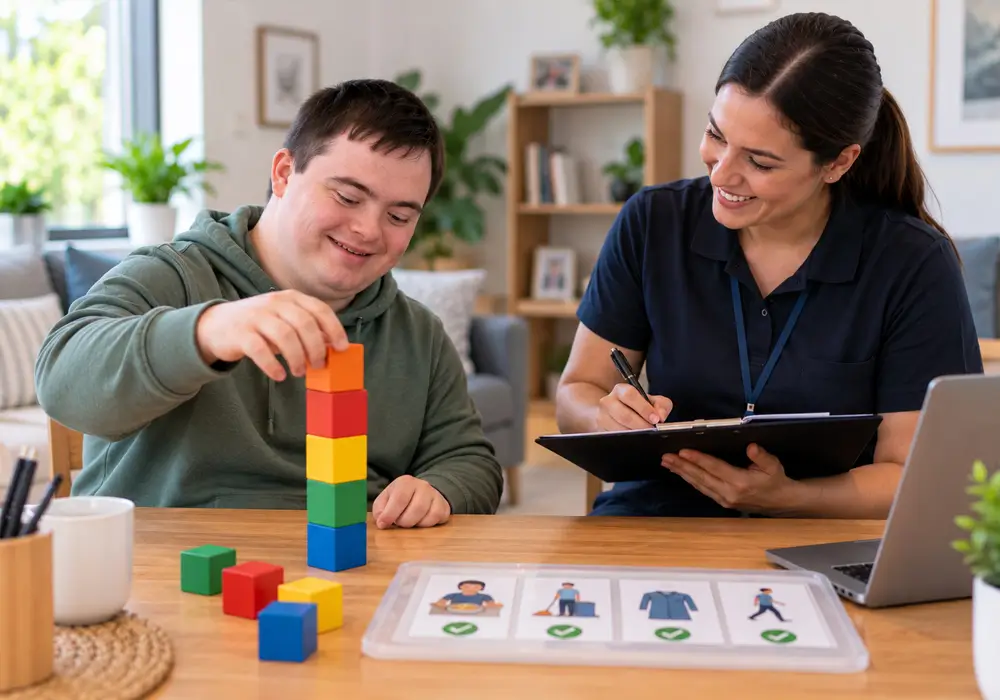
We keep goals concrete enough to know when they’ve been met. Not build cooking skills, which nobody can measure, but cook four meals you like without help by the end of the plan. Vague goals produce years of pleasant, undirected support hours.
-
And we write down what works. Strategies get recorded so a different worker, or you in six months, isn’t reinventing the approach from scratch.
The problems participants run into
The biggest one is support that never fades. A worker comes in, does the cooking, does the cleaning, has a nice chat and leaves. Everyone’s happy and nothing changes. Two plans later the person has exactly the same skills and less confidence than when they started.
Goals written too vaguely to be useful. Improve independence appears in thousands of plans and gives nobody anything to aim at or measure against.
Progress that isn’t recorded, which becomes a real problem at plan review. Without evidence, a participant who has made genuine gains can have Capacity Building funding cut on the basis that it isn’t achieving anything.
Skills taught in the wrong setting. Group programs in commercial kitchens teach cooking that doesn’t transfer to a small unit with one working hotplate.
And the fear underneath it, which people rarely say out loud. If I learn to do this, will they take my support away? It’s a reasonable worry, and a support that never explains how the fading is meant to work leaves it sitting there unaddressed.
How GOTLEHS CARE helps
We set measurable goals at the start and we review them properly, not as a formality in the last month before a plan review.
We record what you can do and when you started doing it. That record is yours, and it’s what protects your funding at review time. A participant who can show a clear progression is in a far stronger position than one who can only describe it.
And we work alongside your other supports. If an occupational therapist has set strategies, our workers follow them, so you’re not being taught two different methods by two different people.
Tell us what you’d like to be able to do
Frequently asked questions
If your question isn’t here, ring us on 0425 799 687. We’d rather answer it properly than have you guess.
How is this different from having a support worker do the task for me?
This support is training, not substitution. A worker delivering personal care or household assistance does the task with or for you. This support teaches you to do it and then steps back in stages. If your hours on a particular skill never reduce, ask why.
Which part of my plan funds it?
Capacity Building, under Improved Daily Living. Because Capacity Building funding is tied to its category, it can’t be topped up from Core, so it’s worth planning how much you’ll use across the plan period.
Will building skills mean my funding gets cut?
Reducing hours on a skill you’ve mastered usually means redirecting them to the next goal rather than losing them. Keeping a clear record of what you’ve achieved actually strengthens your position at a plan review, because it shows the funding is working.
Do you teach in my home or at a centre?
In your home wherever possible. Skills learned in a centre often don’t transfer, because the equipment, the layout and the constraints are all different. Your kitchen, your budget and your local shops are the ones that matter.
How long does it take to build a skill?
It varies enormously with the skill and the person, which is why we set specific goals rather than time frames. Cooking four reliable meals might take three months or a year. What matters is that progress is visible and recorded along the way.