
People managing chronic pain or fatigue, where activity has to be paced carefully and the usual advice to push through is actively harmful.
Registered NDIS Provider · 405 358 3296
NDIS Physical Wellbeing Activities in Queensland
Movement that fits your body, your interests and your week.
What are NDIS physical wellbeing activities?
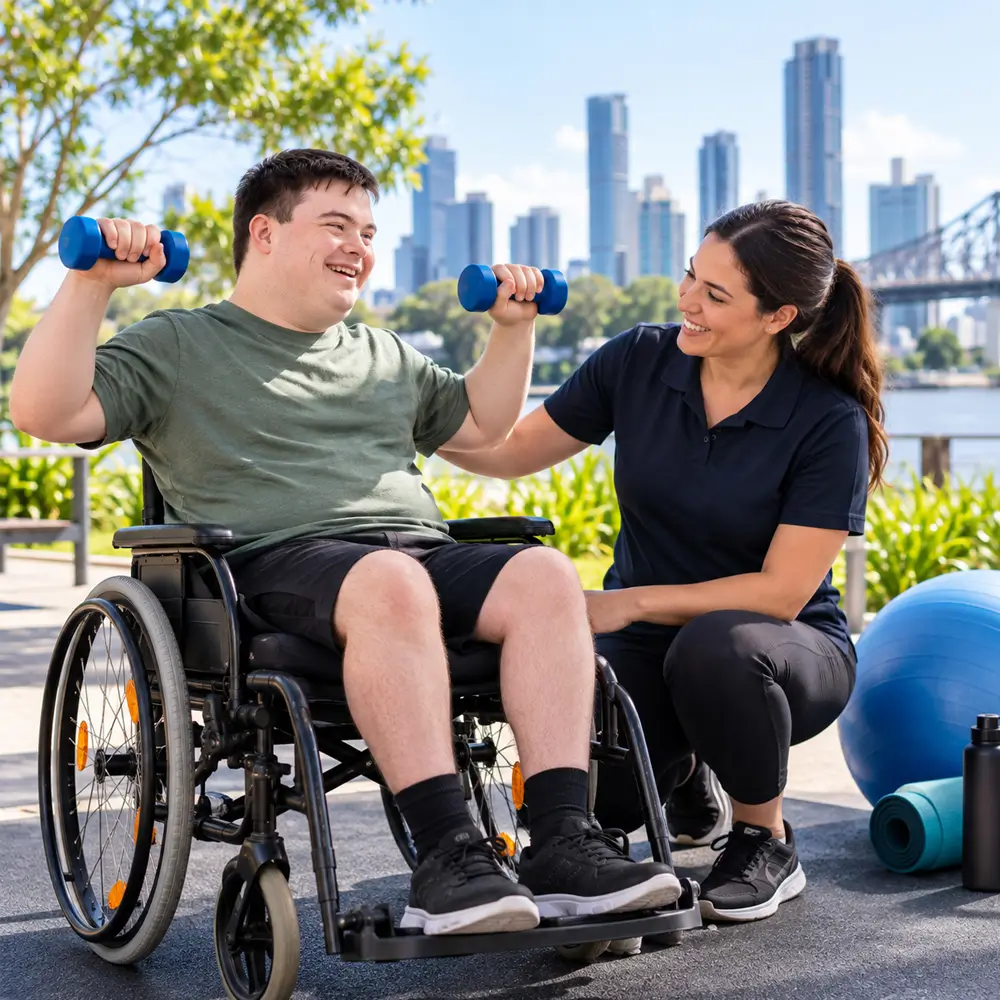
Physical wellbeing support helps you take part in exercise and physical activity that relates to your disability and your plan goals. Walking, swimming, hydrotherapy, gym sessions, sport, and structured programs you do at home.
It’s worth being clear about what the NDIS will and won’t fund here, because this is one of the areas where participants get knocked back most often. The scheme doesn’t fund general fitness or gym memberships that any member of the public would pay for themselves. It funds the additional support you need to participate because of your disability, and programs designed around your specific functional needs.
In practice that usually means a support worker attending with you, or delivering a program that an exercise physiologist or physiotherapist has designed. Depending on how your plan is written, it may sit in Core Supports or in Capacity Building under Improved Health and Wellbeing.
Who this support helps
Participants with psychosocial disability, where regular movement is part of what keeps a week stable and the barrier is getting out the door rather than the exercise itself.
People who have gained significant weight because of medication, reduced mobility or a period in hospital, and want to address it without being lectured about it.
Participants recovering from surgery or injury who have finished formal rehabilitation and need someone to keep the program going at home.
And people who simply used to be active and aren’t any more. Not for a clinical reason. Life got harder, the routine fell away, and getting it back on their own has proved difficult.
How the support works
-
We start with what you’d actually enjoy, because a program you dislike will not survive contact with a difficult week. Someone who hates gyms will not become a person who goes to gyms. They might become a person who walks the Logan River path three mornings a week.
-
Where you already have an exercise physiologist or physiotherapist, we follow their program exactly and report back to them. Our workers deliver what a clinician has set. They don’t design programs themselves, and they won’t override clinical advice because something looks easy enough.
-
Where you don’t have one, and your plan would support it, we’ll suggest getting an assessment first. Starting an exercise routine without one is how people with joint instability or a cardiac history get hurt.
-
We start smaller than most people want to. A ten minute walk you complete beats a forty minute session you abandon in week two. Building from something achievable is slower at the beginning and much faster over a year.
-
And we handle the logistics that quietly stop people. Getting there, the change room, whether the pool has a hoist, whether the class is at a time your energy actually exists.
The problems participants run into
Funding refusals are common, usually because the request looked like general fitness rather than disability-related support. The evidence linking the activity to a functional goal is what makes the difference, and it often isn’t provided.
Accessibility is worse than the brochures suggest. Pools without working hoists. Gyms with equipment nobody can transfer onto. Accessible change rooms used as storage. Participants find this out after they’ve committed and paid.
Programs pitched wrong in both directions. Some are so cautious they achieve nothing. Others are set by someone with no understanding of the condition and leave the participant in pain for three days afterwards.
Motivation gets treated as a character issue rather than a support need. Telling someone with chronic fatigue or depression that they just need to commit is not support, and it lands as blame.
And there’s the social cost. Being the only visibly disabled person in a class, or the slowest person in a group, is uncomfortable enough that plenty of people quietly stop going and don’t explain why.
How GOTLEHS CARE helps
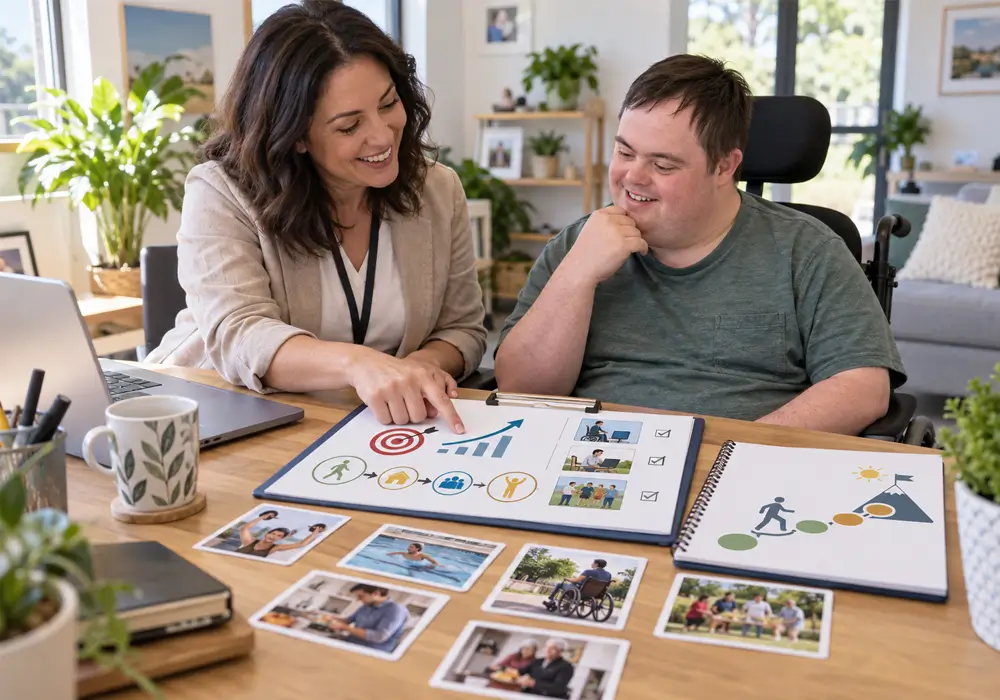
We help you build the case for funding properly, connecting the activity to a functional goal in your plan rather than to general health. A request framed as maintaining transfer strength to remain living at home is treated very differently to a request for a gym membership.
We check venues before you commit. Whether the hoist works, whether the change room is genuinely accessible, whether staff have any experience with disability, and what the place is like at the hour you’d actually attend.
We work to clinical guidance where it exists, and we report back so your exercise physiologist or physio knows what’s happening between appointments.
We treat a bad week as information rather than failure. Fatigue and pain fluctuate. A plan that only works on good days isn’t a plan, so we build in what a low-capacity day looks like before we need it.
And we go with you for as long as that helps. Some people want company indefinitely. Others want it for the first six weeks until walking into the place stops feeling like an event. Both are fine.
Let’s find something you’ll actually keep doing
Frequently asked questions
If your question isn’t here, ring us on 0425 799 687. We’d rather answer it properly than have you guess.
Will the NDIS pay for my gym membership?
Generally not on its own. The scheme doesn’t fund costs any member of the public would pay themselves. What it can fund is the additional support you need to participate because of your disability, such as a support worker attending with you, or a program designed around your functional needs by a qualified clinician.
Do I need an exercise physiologist before starting?
Not always, but it’s strongly advisable if you have pain, joint instability, a cardiac history or a condition where the wrong activity could cause harm. If your plan supports an assessment, getting one first usually produces a better program and a stronger funding case.
What if I can only manage a few minutes at a time?
That’s a perfectly good starting point. Short sessions you complete build more over a year than long sessions you abandon. We’d rather start below your capacity and build than set something ambitious that collapses in the third week.
Can a support worker come with me to a class or the pool?
Yes, and for many participants that’s the part that makes attendance possible. It covers getting there, the change room, and simply not being the only person in the room who feels out of place.
What happens on days when I can’t manage the activity?
We plan for those days in advance rather than treating them as failures. Fatigue and pain fluctuate, and a program that only works on good days isn’t much of a program. There’s usually a lighter version worth doing instead of skipping entirely.